
Showing posts with label Reverse Engineering. Show all posts
Showing posts with label Reverse Engineering. Show all posts
Friday, April 29, 2011
Doweling Jig by Nate Strehler
This doweling jig was reverse engineered in 2010 for a class assignment. In this process, students use micrometers, vernier calipers, and a variety of other measuring tools to get dimensions from an actual part, then create drawings or 3D models. It is a complicated and technical challenge promoting hands-on, minds-on effort. Good work Nate!


Sunday, February 20, 2011
3D Engine Assembly, 2004
For this project, students were each given different parts to reverse engineer. They took precise measurements with micrometers, vernier calipers, thread pitch gages, depth gages, fillet/radius gages, and a variety of other measuring tools, then created 3D models with AutoCAD. It was a complicated and technical challenge, and the kids handled it very well. Many more parts were modeled, including all of the fasteners, but bringing all of them into this file exceeds the limits of our computers.
The reverse engineering of actual parts is a challenging hands-on/minds-on experience and students get a lot of development out of it. Good work CAD class of 2004! Shown below are 3D exploded assembly views.


The reverse engineering of actual parts is a challenging hands-on/minds-on experience and students get a lot of development out of it. Good work CAD class of 2004! Shown below are 3D exploded assembly views.


Friday, February 18, 2011
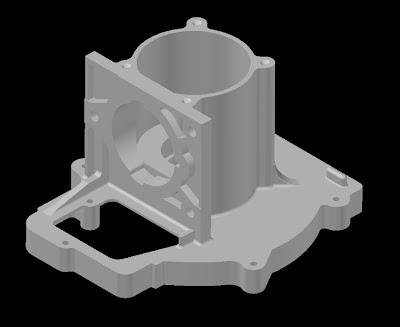
Engine Housing by Stephen Arndt
This engine housing from a string trimmer was reversed engineered in 2010. In this process, students use micrometers, vernier calipers, and a variety of other measuring tools to measure an actual part, then create drawings or 3D models. It is an excellent hands-on, minds-on experience. Good work, Stephen!




Monday, January 31, 2011
Cylinder Head and Camshaft by Adam Dernay
These small engine parts were reverse engineered in 2004 for the engine project displayed somewhere above. Good work, Adam!


Tuesday, December 21, 2010
Router Base by Hope Jordan
This die-cast aluminum base for a Milwaukee router was reverse engineered in 2010. In this process, students use vernier calipers, micrometers, and a variety of other measuring tools to measure an actual part, then create line drawings or 3D models with AutoCAD. It's a complicated and technical challenge. Good work Hope!


Sunday, December 12, 2010
Toggle Clamp by Brad Nabholz
Brad reverse engineered this toggle clamp from our manufacturing lab in 2001. It was a serious challenge! Good work, Commander Data!


Subscribe to:
Posts (Atom)